




 收藏
收藏





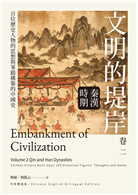
▌第一章 短命的秦朝
秦國歷史概要:從建國到秦昭襄王。呂不韋的政治投機,《呂氏春秋》,呂不韋之死。秦始皇:秦王政與李斯,滅六國,中央集權制,焚書坑儒,嚴刑峻法。陳勝吳廣起義。
秦朝(西元前221年-西元前207年)是中國歷史上第一個統一的中央集權王朝。西元前221年,秦王嬴政滅掉六國、建立秦朝時,自稱「始皇帝」,其後的皇帝稱為「二世」、「三世」……,他希望秦朝可以延續萬世,「傳之無窮」。不料,秦朝竟二世而亡,國祚僅十五年。
二世而亡的秦朝固然短命,但秦朝的前身秦國卻有比較悠久的歷史。
◆第一節 秦國歷史概要
【建國】
秦國的歷史可以追溯到周孝王時期(西元前891年-西元前886年)。秦國先祖嬴非因養馬有功,被周孝王分封在秦邑,號稱「秦嬴」,後人稱其為「秦非子」。
到了周宣王時期(西元前827年-西元前782年),周宣王封秦非子曾孫秦仲為大夫,命他討伐西戎。秦仲在征討西戎時陣亡,其長子即位,是為秦莊公。周宣王召見秦莊公兄弟五人,交給他們七千士兵,命令他們討伐西戎。秦莊公率軍打敗西戎,收復犬丘。犬丘原本就是秦嬴家族的祖居地,後來被西戎所侵佔。周宣王將犬丘歸還秦嬴家族,並封秦莊公為西垂大夫。西垂即西陲,說明秦嬴家族的封地處於周朝的最西邊。此時,秦莊公還只是周王室的大夫,並非正式的諸侯。
秦莊公死後,其子秦襄公即位。經過數代人的慘澹經營,秦嬴家族終於在西陲站穩了腳跟,逐步發展壯大。
平王東遷時,秦襄公帶兵護送周平王至雒邑。周平王封秦襄公為諸侯,並將岐山以西的土地賜予他。岐山一帶是周人的發祥地,此時淪陷於犬戎之手。周平王對秦襄公說:「戎人不講道義,侵奪我岐、豐等地。你們若能趕走戎人,這些土地就歸你們所有。」
周平王與秦襄公立下誓約,封他為伯爵。從這時起,秦國正式建國。
【從秦襄公到秦穆公】
西元前766年,秦襄公率軍討伐西戎,抵達岐山時,便溘然而逝。其子秦文公即位後,率軍打敗西戎,收復了岐、豐等地,大大擴張了秦國版圖。
秦武公時期(西元前697年-西元前678年),秦國吞併了附近戎人的地盤,並向東擴張,直至華山腳下。
西元前678年,秦武公去世,秦國用六十六個活人殉葬。
西元前677年,秦國遷都至雍。雍離中原較近,使秦國與中原諸國的交流便捷了不少,對秦國的發展大有裨益。
由於秦國地處西陲,文化比較落後,人才匱乏,秦穆公(西元前659年-西元前621年在位)積極搜羅各國人才,獲得了百里奚、蹇叔等賢能之士,並委以重任,首創秦國任人唯賢的客卿制度。在百里奚等客卿的輔佐下,秦國國力日益強盛,對天下形勢開始具有舉足輕重的影響。
西元前621年,秦穆公去世,殉葬人數高達一百七十七人,其中包括三位大夫。這三位子車氏(也叫「子輿氏」)的大夫是秦國公認的良臣,秦國人民作《黃鳥》一詩進行哀悼,並控訴人殉制度的罪惡。
秦穆公死後不久,楚國強勢崛起,與晉國爭霸中原。秦國奉行「聯楚攻晉」的方針,但多次被晉國打敗,因而國力日漸衰落。
▌Chapter 1 The Short-Lived Qin Dynasty
Overview of the History of Qin State: From its founding to King Zhaoxiang of Qin. The political speculation of Lü Buwei, Lü Shi Chun Qiu, and the death of Lü Buwei. Qin Shi Huang: King Zheng of Qin and Li Si, destroying the six states, the centralized system of power, burning books and burying scholars, and the implementation of severe laws. The uprising of Chen Sheng and Wu Guang.
Qin Dynasty (221 BC - 207 BC) is the first unified, centralized dynasty in Chinese history. In 221 BC, when King Ying Zheng of Qin destroyed the six states and established the Qin dynasty, he declared himself “First Emperor” (Qin Shi Huang) and envisioned his successors as “Second Emperor”, “Third Emperor,” and so on, hoping the Qin dynasty would last for ten thousand generations and be passed down endlessly. Unexpectedly, the Qin dynasty perished during the reign of its “Second Emperor”, lasting only fifteen years.
The Qin dynasty, which fell in its second generation, was indeed short-lived, but its predecessor, the Qin state, had a relatively long history.
◆Section 1 Brief History of Qin State
The Founding of the State of Qin
The history of the Qin state can be traced back to the reign of King Xiao of Zhou (891 BC - 886 BC). The ancestor of the Qin state, Ying Fei, was granted land in Qinyi by King Xiao of Zhou due to his meritorious service in horse breeding. He was known as “Qin Ying”, and later generations referred to him as “Qin Feizi”.
During the reign of King Xuan of Zhou (827 BC - 782 BC), King Xuan conferred the title of Dafu on Qin Zhong, the great-grandson of Qin Feizi, and tasked him with attacking the Xirong tribes. Qin Zhong was killed in battle against the Xirong, and his eldest son succeeded him as Duke Zhuang of Qin. King Xuan of Zhou summoned Duke Zhuang of Qin and his brothers, a total of five brothers, providing them with seven thousand soldiers and ordering them to campaign against the Xirong. Duke Zhuang of Qin led his troops to defeat the Xirong and recaptured Quanqiu, which had originally been the ancestral home of the Qin Ying family but had been occupied by the Xirong. King Xuan of Zhou returned Quanqiu to the Qin Ying family and conferred the title of Xichui Dafu on Duke Zhuang of Qin. Xichui refers to the western frontier, indicating that the fiefdom of the Qin Ying family was located at the westernmost edge of the Zhou dynasty. At that time, Duke Zhuang of Qin was only a Dafu of the Zhou royal court and not yet an official feudal lord.
After the death of Duke Zhuang of Qin, his son Duke Xiang of Qin ascended to the throne. After several generations of hard work and struggle, the Ying family of Qin finally established a solid foothold in the western frontier and gradually grew in strength.
When King Ping of Zhou moved eastward, Duke Xiang of Qin escorted him to Luoyi. King Ping conferred the title of feudal lord upon Duke Xiang and granted him the land west of Mount Qi. The area around Mount Qi was the birthplace of the Zhou people, but at this time it had fallen into the hands of the Quanrong (a barbarian tribe). King Ping said to Duke Xiang, “The Rong people do not act righteously, they have seized my lands at Qi and Feng. If you can drive the Rong people away, these lands will belong to you.”
King Ping of Zhou made an oath with Duke Xiang of Qin and bestowed the title of earl upon him. From this point on, the state of Qin was officially established.
From Duke Xiang of Qin to Duke Mu of Qin
In 766 BC, Duke Xiang of Qin led an army to campaign against the Xirong tribes. Upon reaching Mount Qi, he unexpectedly passed away. After his death, his son Duke Wen of Qin ascended to the throne, leading the army to defeat the Xirong and reclaim the lands such as Qi and Feng, significantly expanding the territory of the Qin state.
During the reign of Duke Wu of Qin (697 BC - 678 BC), the Qin state annexed the land of the nearby Rong tribes and expanded eastward, reaching the foot of Mount Hua. Duke Wu of Qin passed away in 678 BC and was buried with 66 living persons as sacrifices.
In 677 BC, Qin moved its capital to Yong. The proximity of Yong to the Central Plains facilitated the communication between Qin and the states of the Central Plains, which was of great benefit to the development of Qin.
Due to its location in the western frontier, the Qin state had a relatively backward culture and a shortage of talented individuals. Duke Mu of Qin (reigned 659BC–621 BC) actively sought out talented individuals from various states, and obtained capable figures such as Baili Xi and Jian Shu, whom he entrusted with important responsibilities, which pioneered the system of appointing guest ministers by abilities. With the assistance of these talented guest ministers, the strength of Qin grew increasingly robust, allowing it to begin exerting a significant influence on the situation in the world.
In 621 BC, Duke Mu of Qin passed away, and as many as 177 people were buried alive with him, including three Dafu. These three Dafu from the Ziche clan (also known as the Ziyu clan) were recognized as virtuous officials in the state of Qin. The people of Qin mourned them by composing the poem Yellow Bird, which also condemned the cruel practice of human sacrifice in burials.
Shortly after the death of Duke Mu of Qin, the state of Chu rose strongly and competed with the Jin state for dominance in the Central Plains. The Qin state pursued a strategy of “allying with Chu to attack Jin”, but was repeatedly defeated by Jin, leading to a gradual decline in its national strength.
 瀏覽器,→並以Chrome開啟我的電子書櫃後,點選『線上閱讀』,即可閱讀您已購買的電子書。建議使用 Chrome、Microsoft Edge有較佳的線上瀏覽效果。












 2026專利防護中