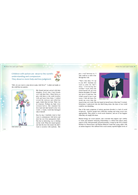
章節試閱
◎
chapter 1
A Life More Significant…
“It is not in the stars to hold our destiny but in ourselves.”
—William Shakespeare
I cuddled newborn Sylvia in my arms as
close as I could, mesmerized by her.
A little girl, perfect in every way.
Before Sylvia was born, I had an easy, perfect life. I had just published my new book, my oldest daughter had just gone to college, and my two-year-old daughter, Alina, was growing into a beautiful, brilliant girl.
Then Sylvia came into my life.
I was happier than anybody else.
It was one of those hot California summer days. Early that morning, I was brought to the hospital maternity ward plagued by nauseating cramps that grew increasingly frequent and severe as time passed. I didn’t want the nurse to give me any shots to kill the pain. I believed that if I could give my child a natural birth, I could tolerate any physical hurting.
I lay on the bed thinking and picturing what Sylvia would look like. She’d been with me for nine months. Now it was time for us to face each other. I was going to see her any minute; this thrilled me. I simply couldn’t wait any longer, even though this was not my first time to have a baby. I guess all parents are just like me, picturing the moment of infinite happiness when we see a new born baby—a new life, a new beginning and a new member entering the family.
Life couldn’t be better in that moment.
When the nurse laid Sylvia in my arms, I was amazed by how tiny she was: 6lbs.11oz.With only one eye open, I noticed their clear, indescribable, light green color. She seemed to see me looking at her intently. Perhaps she was timid, looking at me for the first time, but she quickly closed her one eye and locked herself in darkness.
I cuddled newborn Sylvia in my arms as close as I could, mesmerized by her. A little girl, perfect in every way, she wasn’t like me. She had soft light brown hair with the longest, dark eyelashes I had ever seen. Her slim fingers, even though she curled her tiny hands, were created for playing piano. Maybe she could be a musician when she grew up?
I started picturing her future, thinking about a deeper meaning to our lives. But a twinge worry came to me all of a sudden; a growing sense that something was wrong. A dreadful feeling began to rise and spread throughout my body. Sylvia didn’t cry immediately after she was born like my other two daughters. They had cried loudly, as if proud to make their announcements, “We are here!”But Sylvia was different. She came into this world silently—paused for a few minutes, didn’t make a sound—until the nurse patted her tiny butt. Then she finally cried, but sounded very unhappy, and it only lasted short while.
Why didn’t she cry by herself? Perhaps there were connections in her brain that did not develop properly? A wave of fear pulled me into the reality as I couldn’t visualize the problem. “Is there something wrong with her?” My unsteady voice shocked me.
The nurse said a lot of newborn babies didn’t cry right away. Sylvia was one of them. Her words calmed me down a bit, but I still had my doubts. Was there anything that pulled her into her own world? Tons of questions were dancing in my head.
Sylvia was quiet. I didn’t like the silence between us; it disturbed me somehow. It’s difficult to describe how I felt; even harder to expect others to understand the worry on my face. I was weighed down; my joy had been stolen from me. I couldn’t imagine life with a child that could not function normally.
Anxiety rose and filled my throat choking me. I had never felt so terrified. I would rather there be something wrong with me than even thinking that there might be something wrong with my child.
Fear consumed me.
“Every child is different.” The nurse said to me when she saw my troubled face. “She’s perfect, isn’t she?” She added more words as she stepped out the door.
“Yes, you are right, she is perfect.” I said, crying and smiling at the same time. Of course, I would tell Sylvia she was going to grow up and turn into a beauty. She would grow and glow. She would amaze herself. She would embrace the whole world. And I would love this amazing, beautiful gift so much.
My husband sat next to me and held my hand, his eyes fixed on Sylvia the whole time, oblivious to my expressions. My oldest daughter, Jenny, has always been a happy girl, never jealous or envious of my attention; content with Alina and now Sylvia. She stood there wearing the biggest smile, eyes filled with affection, as she gazed at Sylvia. Alina was the only one who tried to draw everybody’s attention away from Sylvia. Two-years-old by then, she sat up and lay down, then grabbed my hand and nestled in my arm, but all my attentions were on Sylvia. Alina felt ignored and finally said, “Oh, man!”
We all burst into laughter and looked at Alina who buried her head under my arm. I quickly brought her closer to my chest and turned her face up. As I looked down on her perplexed expression, I immediately realized how sensitive she was. I didn’t even think about how she would react to her new baby sister. She was both happy and somewhat lost during the pregnancy. I could tell she couldn’t wait to see Sylvia, but at the same time she was afraid of sharing me; the jealousy perpetually in her eyes. I wanted to share my affections equally, but Sylvia absorbed all my strength and attention from the moment she was born.
Observing Sylvia, her eyes were closed, not wondering this new world around her, not connecting with her family members. Anxiety consumed me.
“She’s fine,” my husband said confidently, yet his voice was weak. I should have listened to him, trusted his judgment, but his faded voice hung in the air making me nervous. I could barely breathe.
Our marriage slipped away when Alina was a year old. A sad truth. Determined to work it out for her sake, I tried to have a more intimate, loving relationship, and in doing so, I became pregnant with Sylvia. I was in turmoil. One more child in a life filled with so much uncertainty. He was reassuring and convinced me to keep the child, telling me that Alina needed a sibling to play with and I agreed. In China, couples can only have one child due to the 'population quota' law. My oldest daughter was born within those boundaries, but always felt so lonely without a sibling. So now, Alina had a sibling to play with.
Regardless of what her arrival would bring, Sylvia entered our world.
Let smiles stay in life, even though love will hurt. Crying is never an option—most of the time. We all experience joy and grief and everything in between; it’s part of being human.
I tried to stay positive while struggling against all my concerns; tried not to be drawn into Sylvia’s bizarre behaviors, all-consuming angsts, silences and isolating tendencies. More and more my fears and worries frustrated me; disturbing and frightening thoughts only grew day after day as she turned twenty months.
She experienced many forms of anxiety, awkwardness and behavioral challenges. Very uncooperative, she did not look at me when I called her name. I feared she was a deaf. Her development continued to lag behind the normal standards. I was in a constant state of apprehension mixed with profound loss.
For a while, I had excused her sluggish progress as individual variation. But there were too many things to deny: she was not talking—losing her ability for language—had zero vocabulary skills. She’d grab my hand to signal what she wanted, but couldn’t use words to tell me her needs. She was very sensitive to light and noises. She grew alarmed if I rearranged her toys or something she liked. I couldn’t avoid the obvious and had to admit that something was not right.
“Mommy” is the first word for most children mumble, but that word never passed Sylvia’s lips. Neither did any other. I hoped she was just a slow learner.
“It’s going to be okay,” I constantly whispered to myself and Sylvia. I prayed and hoped.
Yes, a life can be more significant. If Sylvia needed me to be “her way”, then I would be “her way” and I would be supportive. Whenever she needed me, I’d stand by her, to be there and not let her fall.
But I was still hoping for a miracle; for Sylvia to suddenly talk and behave like other kids, running around and developing normally. I wanted no shadows to cloud her bright and colorful world. There had to be a better way for her to interact with people; that she would catch up eventually; that my worries would go away forever.
But then came the day my life shattered into a million pieces…
Chapter 3
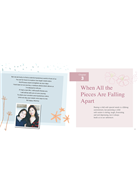
When All the Pieces Are Falling Apart
Raising a child with special needs is a lifelong commitment, but parenting a child with autism is daring, tough, frustrating, sad and depressing, but it always leads us to our adventure.
I knew now that she had autism, could now better understand what she was going through.
I called the time immediately following the diagnosis a very dark period in my life. I was not ready for this label to be applied to my daughter. Sometimes I lay on my bed, wondering how I ended up the parent of a special-needs child. I kind of got used to it, but at the same time, I would never get used to it. It was this feeling of constant surprise when I sat still and thought about it.
How did I get here? How did this happen? I came to accept the fact that something cannot be changed. It was hard to know that things didn’t turn out the way I thought they would. It was very frustrating.
Autism is vast and complex. I knew nothing about it even though Sylvia’s doctor explained the definition to me. After I came home from his office, I ran straight to the computer and looked up autism on the internet. A Google search led me to the Autism Society of America website and tons of articles related to autism.
I studied and found some very disturbing and frightening information. Looking for help, I called up and talked to other people who had the same situation. They gave me the same answer:
Young adults with autism were less likely to find work or live on their own. A report stated that only 3% of adults with autism live completely independent. 49% live with family, 32% live in residential care facilities. 11% have suffered a“nervous breakdown.”
The stark fact was that an epidemic among children with autism today means an epidemic among adults with autism tomorrow. The statistics were dramatic. Some of them will have the less severe variants which stand for “high-functioning autism” and maybe able to live more independent and fulfilling lives. But even with that, they would require some support all their lives.
Daily life with a special-needs child presented so many unique challenges. I could never predict what was going to happen to Sylvia since she had no sense of fear. She ran into busy streets where speeding cars could run over her. She walked straight into trees and bumped her face so many times.
She touched the hot stove and burned her fingers. She stuck a bead in her nose so far that we had to get a doctor to pull it out. She saw a swimming pool and ran straight into it. She poured shampoo on the carpet and laid on it. She squeezed the toothpaste on the mirror and used her finger to draw circles. She threw eggs on the floor one-by-one, truly enjoyed hearing the cracking sound. She pushed the upstairs bedroom window wide open and nearly fell out. Normal children did things like this when they were very little, but they learned.
Sylvia didn’t. Things like this happened every day. I had to keep my eye on her whenever she was awake.
In public, she was excruciatingly embarrassing. If she was upset, she would scream at the top of her lungs. When she was calm, she grabbed strangers’ hands, not saying a word. She couldn’t say what she wanted, but she wanted to be understood so badly. I watched in shame as she failed to notice that people were desperate to find a polite exit from her interminable screams. She banged her head if she was frustrated, no matter where she was. I was desperate for understanding and validation.
But I knew now that she had autism, could now better understand what she was going through. As I read these articles and special-needs children stories, everything made sense to me. Everything fit the doctor’s explanation. Sylvia’s behaviors were now validated.
For the first time in three years, I understood clearly why Sylvia had behaved strangely in the past. For better or worse, I had a realistic perception of the struggle Sylvia had in a world that didn’t identify with her. And, I found out Sylvia’s frustration was not her fault.
Many times I had burst into tears from sheer depression and sadness. For many nights and days, I’d fretted over her life, could not get past it; it haunted me constantly. But now my worries were transforming into respect and protectiveness. Regardless of the prognosis and dire predictions I was given, I would never give up on her.
It’s painful to love so much, to want something so much, and not quite get it. I wanted Sylvia to improve, and to be able to deal with my needs and emotions along the way.
No matter what, I would speak to her even though she couldn’t communicate with me. I would stand by her even though she pushed me away. I would always hug her and kiss her even though she never connected with me. I would praise her for her efforts as much or more than for the outcome they led to. I would focus on what she could do, rather than what she couldn’t do. It was my responsibility to provide not only opportunities for us to grow, but also to maintain patience and strength throughout the developing process. Until that one day she would fully trust me and tell me her stories.
As time passed, I finally accepted Sylvia’s disorder. It took me a while to realize the implications of what was happening through the articles and many similar stories I read and studied. I went through the usual rollercoaster of emotions – fear, worry, loss, confusion, denial and anger. It was heartbreaking to accept the fact that Sylvia might never learn how to speak, function normally, be independent or connect with people.
Because of Sylvia, my special-needs child, I was given the gift of seeing things in a new way. Though we had more bad days than good, I met all sorts of people. I learned that some people just suck; some of them were mean and they stared or glared when they saw Sylvia, couldn’t keep their mouths shut. Some were clueless as to what I was going through. It would be a long and tough road for both of us.
But I was so blessed that Sylvia was officially diagnosed with high-functioning autism in art. There was one thing of which I could be certain: knowledge and insights in medical science and education would continue to grow during all the coming years of Sylvia’s development.
As Sylvia’s doctor told me, each individual with autism is unique; many of those on the autism spectrum have exceptional abilities in visual skills, arts, music, and academic skills, and they can use their unique intellectual abilities to contribute themselves to society. Perhaps Sylvia was one of these many exceptions.
There must be some way to explore her skills. I was reminded how by Sylvia’s doctor.
At the age of three, I had noticed Sylvia was obsessed with two things: she was fond of Disney Barbie dolls, particularly the ones with colorful dresses, and she was fascinated with drawing.
After I found this out, I couldn’t wait a single minute and ran to the store. When I put coloring books and pencils, markers and crayons on her desk, she nearly ran to the desk and grabbed a crayon to color the pictures as if nothing else existed.
This moment forever changed her course.
Immediately and realistically, I predicted Sylvia would have a promising future with her first coloring picture. Like Dustin Hoffman in Rain Man, he showed his intellectual skills counting cards; definitely great at math.
Sylvia was very talented at drawing.
Through her bright colors and bold lines, I saw Picasso and Van Gogh’s arts in her drawings.
Sylvia was quite autistic, but she could draw and was very intelligent. As I stood behind her watching how serious and passionate she was while drawing, the inner conflict and struggle I had endured was released. All the time I took coming to terms with Sylvia’s autism no longer seemed to matter. It only took a glimpse of her facial expression in repose to see her colorful world shining through.
When all the pieces were falling apart, Sylvia sat for hours, tireless in her effort to engage her colorful world to present her bright colors and shapes in a way she could interpret.
I understood her well; saw her clearly. I knew how to communicate with her through the silence now, even though we were still in the dark tunnel looking for a way out. Dark days, dark weeks, even dark years, would ultimately yield to the light shining toward an exit.
Chapter 7
There is No Other Choice
“And still, after all this time, the Sun has never said to the Earth,
"You owe me." Look what happens with love like that. It lights up the sky.”
— Hafez
I treasured every single moment when she was close to me. I looked down at her
peaceful face, but I knew she was sad.
“You’d better sit down.” My voice held a tone of warning. I was very close to losing my patience while I sat next to Sylvia on the floor in the bathroom, training her how to use the toilet.
One morning after I took Sylvia to school and had just come back to the house, her teacher Ms. Clark called me. I grabbed the phone, thinking something serious might have happened.
“Something happened with Sylvia?” I was nearly out of breath before I even managed to speak.
“Nothing happened.” Ms. Clark soothed, sensing my nervousness. She told me not to pack any diapers in Sylvia’s backpack the next day. I panicked immediately, not sure what Sylvia was going to do without a diaper. She never tried to use the toilet; I had never managed to train her.
It would be a big problem. I paused on the phone, not certain how to respond.
“You have to start somewhere.”
I was told to get rid of her diapers and juice bottle. I knew it was embarrassing to let a five-year-old child still wear diapers to school and hold a bottle to drink.
“I will try…to train her after she comes home today.” My voice was soft but Ms. Clark heard me clearly.
“Good.” She said in a firm tone, and then hung up her phone. I paced back and forth in the room, picturing the moment I would try to train her. I could imagine how she was going to scream and fight with me.
That afternoon, after I brought Sylvia home from school, I began to have a battle with her. She was totally lost and shocked when I took her diaper off. I grabbed her hand gently and led her into the bathroom. I knew this would be another challenge, and that I had to be patient with her. She stood in the middle of the room with her pants were pulled down, very confused.
“Sit down, Sylvia. Sit down on the toilet,”I said softly.
There was no reaction from her, but she said, “Juice.”
“Yes, juice,”I said as gently as possible, but instead of giving her a juice bottle, I instantly handed her a glass of apple juice that I had prepared for her earlier. But Sylvia wouldn’t take the glass from me.
“Bottle.” She persisted, and stood still, not looking at me at all.
“No bottle, Sylvia, you are turning into a big girl. A big girl doesn’t use a bottle, right?” I held her and gave her a quick peck on her forehead, but she didn’t care about my affection; all she cared about was her bottle.
We both stood in the small bathroom, not making any movement. I could tell Sylvia was losing her temper. Her face was momentarily furious due to my rejection.
“Bottle!” She raised her voice this time.
“No bottle!” I looked at my red face in the mirror and shouted out: “No! No bottle! The bottle makes you look so stupid! You are a big girl now and you can’t use the bottle anymore!” I didn’t mean to shout and lose my temper. I knew well that raising my voice at sensitive Sylvia would cause her to panic and withdraw; then she would cry, and I would surrender. There was no other choice. It had happened numerous times in our past.
Now I had to pull out her bottle and let her drink. I couldn’t watch her suffer any longer without drinking. Getting rid of both the bottle and diaper was hard to get done in one day. Perhaps one step at a time would work. Once Sylvia had her juice bottle, she sucked on it happily and nosily like a baby with a pacifier. I took the chance to try again when she was comforted. So I told her sit down on the toilet again
Sylvia finally did so obediently and sat on the toilet like a normal child, but less than thirty seconds later she stood up again and struggled to look around. I knew it was time for her to release her bladder, but without a diaper she couldn’t do it. She looked around and her face turned red.
I asked her to sit down, but she wouldn’t listen. I had to push her to sit down just as her teacher Ms. Clark had trained her to sit still on her first day at school. Ms. Clark had finally made her sit still. I believed I would be able to make it happen too. I was ready to work as long as it took to achieve this. It had to start somewhere. I admitted that there was no other choice. I grabbed a book and sat in front of the toilet reading. Whenever Sylvia stood up, I pushed her into sitting again and kept filling her bottle of juice. I knew if she kept drinking, she’d have to relieve herself at some point.
One hour passed, and then two. Nothing happened. I couldn’t remember how many times Sylvia struggled to stand up, but every time she had been pushed back to sitting by my strong hand.
Three hours later, we both felt very exhausted and had no more patience to continue. But finally, Sylvia couldn’t hold it any longer and let go. I watched as her face gradually grew relieved, and I wrapped my arm around her immediately and told her how great she was.
The sound of her urinating thrilled Sylvia somehow. At that moment her face lighted up, a bright contrast from her previous confusion. Once the sound stopped, she pulled away from my arm and stood up instantly, then looked back at the toilet and said, “Yellow.”
“Yes, yellow, Sylvia, isn’t that color beautiful?” I looked at her, excited and touched.
For a parent, it’s easier to let the children get what they want. You want them to be happy. But I knew in my heart that when I instead did what I felt was necessary to help her reach her full potential, whatever that could be, we’d succeed eventually.
“Yellow,”she repeated, very proud of herself. Her little voice brought me back to reality.
“See, you made it! You are a big girl now. I am so proud of you. You don’t need a diaper anymore.” I complimented her and hugged her again, just wanting to kiss her. But she looked bewildered and said, “Diaper.” Her voice sounded light and demanding.
“No diaper, Sylvia.” I responded slowly, and, not giving her a chance to fight me, pulled her pants up quickly.
She went into my office and saw Alina drawing, and ran to her and joined her. Once she started drawing, she could totally forget everything. Alina was always my big helper. She knew how to calm Sylvia down in certain ways, but she was usually sensitive whenever I gave Sylvia’s drawing nice compliments. She would ask me, “What about my drawing?”
“Your drawing is amazing, too.” Once Alina heard my compliment, she would give me a lovely smile; it seemed like my praise meant everything to her. One word and a hug from me often made Alina happy. She was easily pleased, but hurt easily also. She was fully aware that she had a special-needs sister, and she treasured her so much even though Sylvia drew all my attention away from her.
While I sat on the sofa and watched Sylvia and Alina draw, after less than twenty minutes I noticed Sylvia’s drawing motion slow down, her mind obviously somewhere else. She looked uneasy but didn’t get up.
“Something wrong, Sylvia?” I asked her, my voice concerned.
Sylvia looked innocent yet confused. There was an odd expression on her face.
“What’s that smell, mommy?” Alina sniffed in the air, trying to find out.
Suddenly and immediately a smell filled the air, as potent as gasoline. Alina realized that Sylvia had defecated in her pants without wearing a diaper. There was a big mess; her wet pants soaked through the carpet. Alina covered her nose and ran out of the room.
It was a hideous moment. It took Sylvia only a minute to poop, but it took hours to bathe her, then clean her clothes and the carpet. But I was not upset. At least she didn’t mention her diaper. This was a good start. I wouldn’t complain about any messes she made.
Every night I had to change Sylvia’s diaper once or twice while she was sleeping. She couldn’t sleep comfortably with a wet diaper. But that night I let her go to bed without wearing it. She fought with me for a few minutes, and then gave up. Knowing there was no hope, she asked for a juice bottle as a compromise. I realized at this moment that, if I didn’t give her a bottle, she would burst into tears and we’d lose her progress. It was not a good idea to upset her when she was going to sleep.
One step at a time, I told myself. I gave her a juice bottle. If I could get rid of her diapers this week, I would try to cut out her juice bottle next week. Whether Ms. Clark agreed with me or not, I wouldn’t care so much. Even a normal child would be overwhelmed at being given numerous rules at the same time. Sylvia was no exception. I would use my own ways to adjust and convince the teachers, not adopt their expectations for Sylvia.
As a result, Sylvia fell asleep with one of her drawings on her chest and a juice bottle in her hand. Watching her sweet face in the dim pink light, it brought out tenderness in my heart. A mother could sit in the same position and tirelessly watch their child sleep without ever looking away.
It was nearly two o’clock in the morning when I finally fell deeply asleep. I felt someone pulling my blanket away. I instantly opened my eyes and saw Sylvia sitting in the middle of the bed with her underpants off. My instinct told me Sylvia had probably peed in bed. My hand felt over the sheets: everywhere my hand touched was soaked.
“That’s okay,” I tried to comfort Sylvia, and wrapped her in a dry blanket. I removed the wet sheets and put clean and dry ones on the bed so we could go back to sleep quickly. After I put clean underpants on her, I tried to hold her close so we could sleep together, but she wouldn’t lie down. She sat in the middle of the bed and kept a few feet apart from me.
After a few moments of stillness, she rolled out of the bed.
“Where are you going, Silvi?”
“Diaper.”
“Didn’t I tell you no diaper this afternoon already?” I talked to her like I was talking to a normal child. Sometimes I spoke a lot to her without stopping whether she understood or not. I did it on purpose to let her know that she was capable of accepting challenges, because there was no other choice.
“Diaper.” Sylvia walked to the closet and slid the door open, looking inside.
“Come to the bed, Silvi.”
“Diaper.” She stood still, not turning her head.
“It’s getting late. Let’s sleep.” I said in my firmest tone, trying to keep my voice calm in the quiet of the night, realizing that any emotional change on my part would feed her own.
“Silvi, it’s bedtime, come back to bed.” I sat up and looked at her direction. Sylvia didn’t move, not even mentioning her diaper again. But suddenly she lay down on the carpet, facing the diaper box in the closet. I finally got out of the bed and went to her.
“Get up NOW!” I snatched her up and forced her move. I knew immediately I was making a big mistake by such rough enforcement. I could feel her agitation rose.
“Diaper, Mommy.” She spoke two words, this always surprised me. She actually could speak two words when she was upset. In order to challenge her to move forward and speak more words, I did it on purpose from time to time, but it was heartbreaking to face her when she grew agitated.
No diaper, Silvi,” I said calmly, but I grabbed her tightly, not giving her a chance to get her way.
“Juice.” Sylvia negotiated.
“Ok, juice.” I surrendered, walking to the nightstand to pour juice in her bottle. But the refill bottle was empty. I had to go downstairs to get more juice for her.
After I put her on the bed, I left the bedroom hurriedly. As I came downstairs, I heard Sylvia’s rushed footsteps behind me on the carpet. I looked back and saw her holding one of her drawings. The picture she drew was of Jenny, Alina, me, and herself.
This was a family picture in her eyes. What was she trying to tell me? I was very confused; I just couldn’t read her and communicate with her effectively. I stepped forward, very much wanting to hold her, but she stepped backwards. Her eyes were fixed on her drawing and she murmured, “Family.”
“Yes, Silvi, this is our family.” I bent my head, following her eyes on the picture and said patiently, “See your big sister has no diaper, Alina has no diaper, nor does Mommy. Now Silvi is not going to wear that ugly thing.”
“Family,” Sylvia repeated. Obviously she was not satisfied with my statements. Something else was on her mind, but I had no idea what it was, and I was not in the mood to find out so late at night. All I wanted was to go back to bed and get some sleep. I was so exhausted from training her this afternoon.
“Sad.” She sat down on the staircase, totally lost. The sound of the word hit me painfully. I nearly ran to her and sat beside her. I noticed her puzzled eyes were fixed on her drawing, tears welling in them, but she made no eye contact with me. She felt safe and could calm herself by staring at her drawing. She often did this when she was lost and unhappy.
“You are sad. Let’s resolve this problem.” I put Sylvia’s head on my lap so I could stroke her hair slowly. I was totally shocked when she leaned close against my chest. It was the first time in her five years that she had laid her head on me like this. I looked around the hallway; our shadows in the faint light through the windows extended large and clear across the wall. That reminded me of an impressionist’s painting of a mother holding her daughter on a starry night. I hoped this moment could last forever.
When Sylvia finally fell asleep on my lap, I stayed very still. I didn’t want to make any movement that would wake her up. I treasured every single moment when she was close to me. I looked down at her peaceful face, but I knew she was sad. Her word was true of her emotions in that moment. Perhaps I expected too much of her and asked her to do too much. I felt so bad for her feelings, but I was so thrilled that she had expressed herself; that her feelings matched the situation.
Appropriate and timely communication was something I had always wanted with my daughter. Sylvia felt more than she could say or express. That frequently frustrated her. I found myself thinking about just how lonely this five-year-old girl could be without communication skills. I pictured her sitting on a little plastic chair at school, looking into space and staring at nothing. For most of us the blankness led us to somewhere we could see and feel that we could ask about and interact with. But for Sylvia, like this afternoon when I requested her not to wear a diaper, she couldn’t understand, not knowing exactly why she had to take her diaper off and why her mother asked her to do so. Everything was unknown to her. So she felt sad. She was sad.
I thought about getting up and taking her to bed so she could sleep comfortably, but I knew I would wake her up. So I closed my eyes and soon I drifted off. When I woke up the next morning, I had apparently moved us both to the bed. Sylvia was lying beside me, breathing evenly without a diaper on her. The bed was dry. She hadn’t peed in bed the rest of that night.
I got up quietly and carefully, so as to not wake her up. As I walked to the door, I paused for a moment and glanced back, watching her sleep like a sweet angel.
She was sad, but I was very content that she had made it through the rest of the night without wearing a diaper or wetting the bed. I knew that she would be capable of making it through the rest of the morning and the upcoming day.
She was sad, but I was happy that she had said that word, a new and meaningful word that she could use to connect, express and interact with me.
◎
chapter 1
A Life More Significant…
“It is not in the stars to hold our destiny but in ourselves.”
—William Shakespeare
I cuddled newborn Sylvia in my arms as
close as I could, mesmerized by her.
A little girl, perfect in every way.
Before Sylvia was born, I had an easy, perfect life. I had just published my new book, my oldest daughter had just gone to college, and my two-year-old daughter, Alina, was growing into a beautiful, brilliant girl.
Then Sylvia came into my life.
I was happier...
推薦序
◎When I first met Sylvia, she was quick to flash a bright smile and offered me a warm, fuzzy hug. I instantly fell in love. My son Taylor, who was with me that day, leaned in and whispered, “Mom, she's really friendly, isn't she?"
"Yes. Like I did with you, her mom uses art to help Sylvia with the challenges of autism. Katherine encourages and engages her daughter's talents to help her communicate." Taylor nodded, and with a knowing smile, winked at me.
All about Sylvia is also like a wink and a nod.
All about Sylvia contains progressive ideas in autism that leaders and advocates are finally beginning to get: that the arts, including painting; drawing; music, drama; dance, and other forms of creative expression, can offer possibilities for growth and development in autism beyond our wildest imaginations.
When the arts are used with focus and clear intention - as Katherine has done and is doing with Sylvia - opportunities to develop just about any skill you can think of are possible. From emerging life and social skills; to building self-esteem, awareness and self-determination; to enhancing emotional intelligence; and teaching language and academic subjects, the arts provide a safe, creative and affordable tool that you can use to help your child acquire new skills.
And… the arts can help you acquire new skills as well.
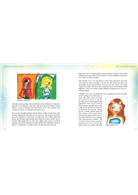
When Sylvia was three, and at the same time she was diagnosed with autism, her interest in drawing and sketching began to emerge. Even at such a young age, Sylvia's work incorporated a witty playfulness. Colorful, imaginative and thoughtful, her early drawings exhibit a high degree of exploration; as if Sylvia was literally reaching out to touch and play with colors, shapes and angles to figure out more about the world. Sylvia was able to express through art, what words failed to say.
Between three and seven years old, we see that Sylvia's art makes a fascinating transcendence. From her earlier, more primal works, figures depict intentional distortions. Asymmetrical designs provide thought-provoking expressionistic ideas reminiscent of Picasso, Braques, Van Gogh, and Klee. It is clear that Sylvia was making declarative choices by intentionally distorting faces, bodies and eyes. Personally, I'm quite fond of how Sylvia draws eyes - or often, a single eye - that seems to laugh, blink and/or nod, as if her characters are letting us in on her secrets.
While All about Sylvia is a book filled with whimsical, imaginative drawings, I know you'll find this book is much more than just about Sylvia and her artwork. It is also about your story; your journey, and mine.
In sharing Sylvia's challenges and successes in autism, Katherine recounts her own experiences in coming to terms with autism. I have no doubt you'll relate to her story. From denial and diagnosis to acceptance, Katherine shares insights into how to remain hopeful after discovering your child has special needs. She shows us how parents, siblings and other family members can learn to cope and grow with the one they love, a child who happens to be autistic. She also gives us ideas about how to build a relationship when communication is minimal or non-existent, and how to bond with your child - as they are - because even with their challenges, they perfectly aut-some!
Dare I say Aut-some? After all, autism is a 24/7 job - and it ain't easy, right? Let's be real. Autism can be downright painful. And the future... what does the future hold? Even with all the difficulties of sleepless nights and scary meltdowns, I still dare to declare that our children with all their complexities and mysteries are aut-some.
Mother-to-mother, I can tell you this is my truth, and I believe it is Sylvia's truth. I hope it is, or will one day be, your truth as well. For me, it wasn't easy in the early years to come to this truth. As a single mom, living with autism in my home day after day, night after night, was a never-ending rollercoaster. Though less so now, twenty-six years later it still is. Yet finding the aut-some in my son through the arts, is what helped to save my very soul so that I could help Taylor to live beyond the label of autism - and help me beyond the darkness.
And so I ask... where was this book way back then when I needed it? As a wacky artist, back in a time when there was no internet to connect me to others, and there were few books and little knowledge about autism, I listened to my inner voice that said: use the arts to emerge Taylor.
When he was six months old, I put paint on Taylor's finger tips. He hated it. Still, I did it over and over again (the voice in my head screaming: What the Hell are you doing, Keri?) until one day he simply accepted the paint and even played in it. Today we call that sensory integration.
When Taylor smiled that stiff 'ism' smile (you know the one), I used video and photographic modeling to show him; not tell him how to smile naturally. As he learned to speak words, and then sentences, I used drama to help modulate his voice and to grow his imagination. When Taylor was a nearly two, and I was told that he might never walk or talk, I used the arts to heal myself. As he got older, to help him with academics, and rote memory, we made up and sang silly songs, as for developing social and life skills? I used any and every form of art imaginable to see what worked and stuck.
Today, at twenty-six, Taylor lives in his own apartment with limited supports, yet he flunked out of college. Today, Taylor makes art, which wasn't his thing as a kid; film was. Together we've made four popular autism films - the first being his idea.
So on that Sunny day in Southern California when we first met Sylvia and Taylor winked and nodded, that was the day I felt pink fuzzies for Sylvia, and the day I fell in love with All about Sylvia. I know you will too. As you read the pages of this aut-some book, I encourage you to look beyond the obvious enjoyment of the arts and even beyond Sylvia's story and beautiful, to see greater possibilities for your own child and ask: What can the arts do for my child?
P.S. Have tissue at the ready.
Keri Bowers
Filmmaker, writer, artist, and autism
Advocate/educator, but always an autism mom first.
Los Angeles, California
◎When I first met Sylvia, she was quick to flash a bright smile and offered me a warm, fuzzy hug. I instantly fell in love. My son Taylor, who was with me that day, leaned in and whispered, “Mom, she's really friendly, isn't she?"
"Yes. Like I did with you, her mom uses art to help Sylvia with the challenges of autism. Katherine encourages and engages her daughter's talents to help her communicate." Taylor nodded, and with a knowing smile, winked at me.
All about Sylvia is also like a wink and...
作者序
◎
My deepest appreciation goes to my daughter Sylvia who made me a new person and provided me the perfect chance to prove I had what it took to face any hardships or misfortunes. And, of course, my other two daughters, Jenny and Alina, who have always been my greatest supporters helping me all along the way.
I thank all my dear family members, whose encouragement spurred me to continue the journey. My thanks to my editor, Michelle Henson, who has done a great job. I wish to express my appreciation to my beloved friends for providing me faith and love. This book would not have been possible without them.
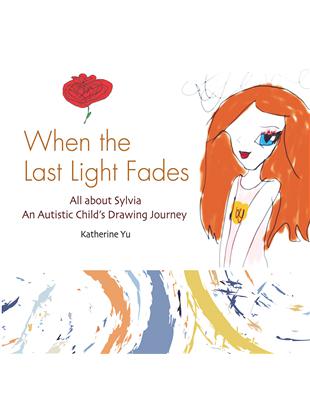
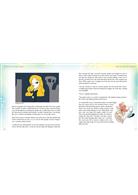
Look at the girl in this picture. Simple words cannot describe how bright, lovely, cheerful, and unique she is.
Her name is Sylvia; I always call her Silvi. Look at these pictures—the way she looks at you can melt your heart away.
Sylvia, in Latin, means forest' and in my native Chinese, the last syllable Ya, sounds very beautiful. She is everything I have ever wanted in life: a pretty little girl with creamy, porcelain-doll skin, lovely light-green eyes and a beautiful face, but she is also a special-needs child with autism; one of those 1-in-68 children, according to the recent CDC (Center for Disease Control) report on the estimated, increased autism rates.
Just look at her: sparkling eyes telling you stories; unique expressions showing you her wonders. Who can ever imagine she is an autistic child? She’s neither damaged nor broken. She’s just an example of human variation, like any child. But obviously, Sylvia is not like most “normal” kids when it comes to specifics like talking, socializing, learning and tolerating crowds.
Unfortunately, Sylvia has been diagnosed with autism.
When my daughter Sylvia was diagnosed with autism at age three, I didn’t even know what the autism was. I was totally in the dark but couldn’t wait to find the answer. For all those years, I’d been searching. Now I have All about Sylvia: An Autistic Child’s Drawing Journey.
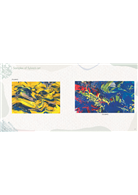
All about Sylvia is a book documenting my daughter’s journey; mirrored by remarkable drawings at different stages in her growth. Although she is only fifteen years old, her work will surprise you. While the early art is, at first, experimental—heartfelt and colorful—her later artwork quickly transforms into intense, expressionistic drawings, offering challenging perspectives with distorted faces, bodies and eyes, reminiscent of Van Gogh, Pablo Picasso and George Braques.
She allows us to see her characters as abstracts, from different angles, sometimes broken apart, in extraordinary, intuitive and imaginative qualities far beyond her years.
To describe and understand Sylvia, one must first start with the broad label used to explain her talent—autism. Kids today face a complex world, particularly for those children with special needs. Autism Spectrum Disorder (ASD) affects over two million people in the U.S. and millions worldwide. My hope is that this book will not only educate but also inspire parents, children, educators, and society in general, filling them with courage, confidence, faith, self-esteem, love and hope in their personal quests with this disorder.
That said, there are three crucial topics addressed in All about Sylvia. First is how to communicate with your child, second is how to build a relationship with him/her, and third is how to remain hopeful after discovering you have a special-needs child.
How do parents and other family members cope, learn, and grow? All about Sylvia focuses simultaneously on how we are challenged by the problems of autism and how autistic children express themselves through imagination connecting to the world through their gifts/talents. In Sylvia’s case, through art with one or two-eyed characters’ expressions, she transformed everything around her into what she saw and imagined.
People have been consistently fascinated by Sylvia’s artwork, which is why I decided to write this book. It is my hope others will find their way through her.
I will be with you
I will be with you on your journey
I don’t know where the path ends
But if we walk together,
We will find a place where we should be
Because you gave me the strength to hold on
You gave me the motivation to never stop
You showed me the meaning of love
I laugh and I cry, there must be a reason
After months of eager anticipation
The day finally arrived
I never knew I could love so much
Until the moment you entered my life
The minute I was told all about you
You graced my life through different ways
I fell in love with you immediately
When I first saw your precious face
I prayed your life be filled with joys
I linger my gaze at your nose and eyes
As each moment passes my love for you will increase
I never know I could love so much
Until the moment I stepped into your journey
When I called your name, you wouldn’t look at me
When I tickled your toes, I didn’t hear your laugh
Your cold silence tears me into pieces
This endless distance pushes me into darker depths
I know I have a brutal battle to face
When loud noises make you cover your ears
When the spectators stare at your strange ways
Do not show fears with tears
Because the tears that you have
Are the tears coming from my eyes
We’ve been through dark and uneven roads
But we are lucky to find a colorful mysterious world in front of us
You sat for hours to explore Van Gogh’s bold colors
And Picasso style to brighten up your days
I look back at our journey, a rainbow shines down above us
I’m blessed to tell you
If I had a next life, I still would choose you
I will still be with you on your journey
To share your wonders and mysterious colors
Until one day your sweet voice says to me:
Be happy, Mommy
◎
My deepest appreciation goes to my daughter Sylvia who made me a new person and provided me the perfect chance to prove I had what it took to face any hardships or misfortunes. And, of course, my other two daughters, Jenny and Alina, who have always been my greatest supporters helping me all along the way.
I thank all my dear family members, whose encouragement spurred me to continue the journey. My thanks to my editor, Michelle Henson, who has done a great job. I wish to express my appreciat...


 收藏
收藏

 二手徵求有驚喜