 收藏
收藏

 二手徵求有驚喜
定價:NT$ 2178
限量商品已售完



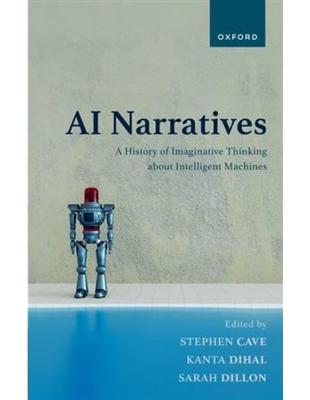
This book is the first to examine the history of imaginative thinking about intelligent machines. As real Artificial Intelligence (AI) begins to touch on all aspects of our lives, this long narrative history shapes how the technology is developed, deployed and regulated. It is therefore a crucial social and ethical issue.
Part I of this book provides a historical overview from ancient Greece to the start of modernity. These chapters explore the revealing pre-history of key concerns of contemporary AI discourse, from the nature of mind and creativity to issues of power and rights, from the tension between fascination and ambivalence to investigations into artificial voices and technophobia.
Part II focuses on the twentieth and twenty-first centuries in which a greater density of narratives emerge alongside rapid developments in AI technology. These chapters reveal not only how AI narratives have consistently been entangled with the emergence of real robotics and AI, but also how they offer a rich source of insight into how we might live with these revolutionary machines.
Through their close textual engagements, these chapters explore the relationship between imaginative narratives and contemporary debates about AI's social, ethical and philosophical consequences, including questions of dehumanization, automation, anthropomorphisation, cybernetics, cyberpunk, immortality, slavery, and governance. The contributions, from leading humanities and social science scholars, show that narratives about AI offer a crucial epistemic site for exploring contemporary debates about these powerful new technologies.
作者簡介:
Dr Stephen Cave is Director of the Leverhulme Centre for the Future of Intelligence, Senior Research Associate in the Faculty of Philosophy, and Fellow of Hughes Hall, all at the University of Cambridge. After earning a PhD in philosophy from Cambridge, he joined the British Foreign Office, where he spent ten years as a policy advisor and diplomat, before returning to academia. His research interests currently focus on the nature, portrayal and governance of AI.
Dr Kanta Dihal is a postdoctoral researcher at the Leverhulme Centre for the Future of Intelligence, University of Cambridge. She is the Principal Investigator on the Global AI Narratives project, and the Project Development Lead on Decolonizing AI. In her research, she explores how fictional and nonfictional stories shape the development and public understanding of artificial intelligence. Kanta's work intersects the fields of science communication, literature and science, and science fiction. She is currently working on two monographs: Stories in Superposition, based on her DPhil thesis, and AI: A Mythology, with Stephen Cave.
Professor Sarah Dillon is University Lecturer in Literature and Film in the Faculty of English, University of Cambridge. Her books include The Palimpsest: Literature, Criticism, Theory (2007), Deconstruction, Feminism, Film (2018), and Listen: Narrative Evidence and Public Reasoning (2020, co-authored with Claire Craig). She is the General Editor of the series Gylphi Contemporary Writers: Critical Essays, and editor of two volumes in the series: David Mitchell: Critical Essays (2011), and Maggie Gee: Critical Essays (2015, co-ed). Dr Dillon was a 2013 BBC Radio 3/Arts and Humanities Research Council New Generation Thinker and regularly broadcasts on BBC Radio 3 and BBC Radio 4.
退換貨說明:
會員均享有10天的商品猶豫期(含例假日)。若您欲辦理退換貨,請於取得該商品10日內寄回。
辦理退換貨時,請保持商品全新狀態與完整包裝(商品本身、贈品、贈票、附件、內外包裝、保證書、隨貨文件等)一併寄回。若退回商品無法回復原狀者,可能影響退換貨權利之行使或須負擔部分費用。
訂購本商品前請務必詳閱退換貨原則。作者:Stephen Cave, Kanta Dihal, Sarah Dillon
收藏
二手徵求有驚喜
定價:NT$ 2178
限量商品已售完
This book is the first to examine the history of imaginative thinking about intelligent machines. As real Artificial Intelligence (AI) begins to touch on all aspects of our lives, this long narrative history shapes how the technology is developed, deployed and regulated. It is therefore a crucial social and ethical issue.
Part I of this book provides a historical overview from ancient Greece to the start of modernity. These chapters explore the revealing pre-history of key concerns of contemporary AI discourse, from the nature of mind and creativity to issues of power and rights, from the tension between fascination and ambivalence to investigations into artificial voices and technophobia.
Part II focuses on the twentieth and twenty-first centuries in which a greater density of narratives emerge alongside rapid developments in AI technology. These chapters reveal not only how AI narratives have consistently been entangled with the emergence of real robotics and AI, but also how they offer a rich source of insight into how we might live with these revolutionary machines.
Through their close textual engagements, these chapters explore the relationship between imaginative narratives and contemporary debates about AI's social, ethical and philosophical consequences, including questions of dehumanization, automation, anthropomorphisation, cybernetics, cyberpunk, immortality, slavery, and governance. The contributions, from leading humanities and social science scholars, show that narratives about AI offer a crucial epistemic site for exploring contemporary debates about these powerful new technologies.
作者簡介:
Dr Stephen Cave is Director of the Leverhulme Centre for the Future of Intelligence, Senior Research Associate in the Faculty of Philosophy, and Fellow of Hughes Hall, all at the University of Cambridge. After earning a PhD in philosophy from Cambridge, he joined the British Foreign Office, where he spent ten years as a policy advisor and diplomat, before returning to academia. His research interests currently focus on the nature, portrayal and governance of AI.
Dr Kanta Dihal is a postdoctoral researcher at the Leverhulme Centre for the Future of Intelligence, University of Cambridge. She is the Principal Investigator on the Global AI Narratives project, and the Project Development Lead on Decolonizing AI. In her research, she explores how fictional and nonfictional stories shape the development and public understanding of artificial intelligence. Kanta's work intersects the fields of science communication, literature and science, and science fiction. She is currently working on two monographs: Stories in Superposition, based on her DPhil thesis, and AI: A Mythology, with Stephen Cave.
Professor Sarah Dillon is University Lecturer in Literature and Film in the Faculty of English, University of Cambridge. Her books include The Palimpsest: Literature, Criticism, Theory (2007), Deconstruction, Feminism, Film (2018), and Listen: Narrative Evidence and Public Reasoning (2020, co-authored with Claire Craig). She is the General Editor of the series Gylphi Contemporary Writers: Critical Essays, and editor of two volumes in the series: David Mitchell: Critical Essays (2011), and Maggie Gee: Critical Essays (2015, co-ed). Dr Dillon was a 2013 BBC Radio 3/Arts and Humanities Research Council New Generation Thinker and regularly broadcasts on BBC Radio 3 and BBC Radio 4.
退換貨說明:
會員均享有10天的商品猶豫期(含例假日)。若您欲辦理退換貨,請於取得該商品10日內寄回。
辦理退換貨時,請保持商品全新狀態與完整包裝(商品本身、贈品、贈票、附件、內外包裝、保證書、隨貨文件等)一併寄回。若退回商品無法回復原狀者,可能影響退換貨權利之行使或須負擔部分費用。
訂購本商品前請務必詳閱退換貨原則。
※ 二手徵求後,有綁定line通知的讀者,
該二手書結帳減2元。(減2元可累加)
請在手機上開啟Line應用程式,點選搜尋欄位旁的掃描圖示
即可掃描此ORcode




 2026專利防護中
|
||||||||||||||||||
|
||||||||||||||||||
|
||||||||||||||||||